Professional Guide: How to Board Up a Window Safely
When a window is shattered or compromised in Sherman Oaks, the priority for any property owner is immediate security. Whether due to an attempted break-in, severe weather, or accidental impact, an exposed opening leaves your residence or place of business vulnerable to both the elements and unwanted intruders. Acting quickly to board up a window is not merely a convenience; it is a critical defensive measure that prevents further loss and protects the interior of your property from the Southern California climate, which can introduce dust, moisture, and pests into an unprotected space.
Many homeowners attempt to mitigate this issue with makeshift materials like plastic sheeting or duct tape, which often provide a false sense of security. These temporary fixes do not deter determined intruders and fail to withstand the gusty winds often experienced in the San Fernando Valley. Understanding the correct technical approach—using appropriate materials like exterior-grade plywood and proper fastening hardware—is essential for maintaining the integrity of your property until a permanent glass replacement or frame repair can be scheduled. This guide provides the necessary technical standards to secure your premises effectively and safely.
Quick answer: what boarding up a window means (temporary security until permanent repair)
Boarding up a window is a specific temporary security measure designed to seal an opening where the glass or frame has been compromised. It serves as a physical barrier to prevent unauthorized access and protect the interior from external environmental conditions. It is important to emphasize that this is a transient solution; it is not meant to be a permanent aesthetic fix for your property. The process involves installing a rigid, durable material over the window opening to restore the building envelope to a secure state while you wait for professional glass repair services to arrive and restore the window to its original condition.
For residents in Sherman Oaks, the need for a professional-grade board up often arises unexpectedly. When you choose to board up in Sherman Oaks, you are ensuring that the structural integrity of your window frame is maintained during the temporary process. Unlike makeshift solutions that might leave gaps or damage the surrounding stucco or wood, a professional board up is calculated to provide maximum deterrence against intruders while being easily removable once the new glass is ready for installation. This temporary phase is critical for maintaining property value and insurance compliance.
What you need (5/8-inch exterior plywood per FEMA, screws, drill, tape measure, safety gear)
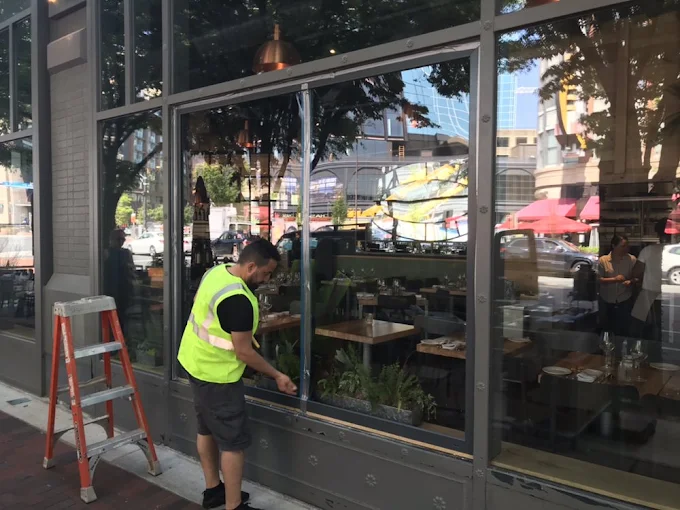
To execute a secure board up, you must utilize the correct materials. FEMA guidelines recommend 5/8-inch exterior-grade plywood for its durability and resistance to impact. Thinner materials, such as particle board or standard interior plywood, will not provide the necessary strength to resist forced entry or high wind loads. Along with the plywood, you require a high-torque drill, exterior-rated wood screws, a reliable tape measure, and personal protective equipment, including heavy-duty gloves and safety glasses to handle shards of broken glass safely during the installation process.
Having the right tools ensures that the board up is not just a cosmetic cover but a functional security asset. In Sherman Oaks, where building styles vary from modern residential to older commercial storefronts, the hardware required may change based on the wall material. You must ensure that your fasteners are long enough to penetrate deep into the framing members of the house, rather than just the trim or siding. Using the wrong length of screw or an inadequate material thickness can lead to a false sense of security, as the board could be easily pried away by an intruder.
Measure and cut (measure the opening plus overlap; cut to size)
Precision is paramount when measuring for a board up. You must measure the entire window opening from the outermost edges of the frame to ensure the plywood covers not just the glass area, but the structural frame itself. A standard practice is to allow for an overlap of at least two to three inches on all four sides. This overlap is crucial because it allows the fasteners to bite into the solid structure of the building wall rather than attempting to secure the board into the damaged window frame itself, which may be unstable.
Once you have your dimensions, use a circular saw to cut the plywood to size. Ensure that your measurements account for any obstructions, such as security bars or exterior molding, that might prevent the plywood from sitting flush against the wall. A flush fit is necessary to prevent intruders from gaining leverage to pry the board away. After cutting, double-check the fit against the window opening before attempting the final installation. If the board is too small, it will not provide the necessary protection; if it is too large, it may be cumbersome to handle safely while working on a ladder.
Install it: screws into the frame vs anchors for masonry and stucco
The installation method depends entirely on the exterior finish of your Sherman Oaks property. If you have a wood-framed home, you can drive exterior-rated wood screws directly into the framing studs surrounding the window. Ensure you are targeting the structural members and not just the window casing, as the casing is often too thin to hold a board against significant force. Always pre-drill holes in the plywood to prevent the wood from splitting during installation, especially if you are working near the edges of the sheet.
For homes with masonry or stucco finishes, the process requires more specialized hardware. You cannot simply screw into stucco; it will crumble, and the board will fail. Instead, you must use masonry anchors or specialized fasteners that penetrate the underlying structure. This often requires a hammer drill and concrete-rated screws. If you are unsure of the wall composition behind the stucco, or if you are dealing with a commercial storefront, it is highly recommended to seek professional assistance to avoid causing extensive, expensive damage to the building facade during the installation process.
Inside vs outside: which side and why
The standard industry practice for boarding up a window is to install the plywood on the exterior of the building. Placing the board on the outside serves as a primary deterrent to potential intruders, as it signals that the property is being monitored and that the entry point is hardened. Furthermore, exterior installation prevents the broken glass from falling further into the interior of the home, which is a significant safety hazard. It also keeps the building envelope sealed against the elements, preventing rain or wind-blown debris from entering the premises.
In rare instances, such as high-rise apartments or cases where exterior access is impossible, an interior board up might be considered. However, this is significantly less secure and does not protect the window frame from external damage. An interior board up should only be used as an absolute last resort. In almost all residential and commercial scenarios in Sherman Oaks, the exterior approach is the only method that satisfies security requirements and effectively protects the building from weather and unauthorized access until the permanent repair is finalized.
Sliding doors and large openings (2x4 bracing)
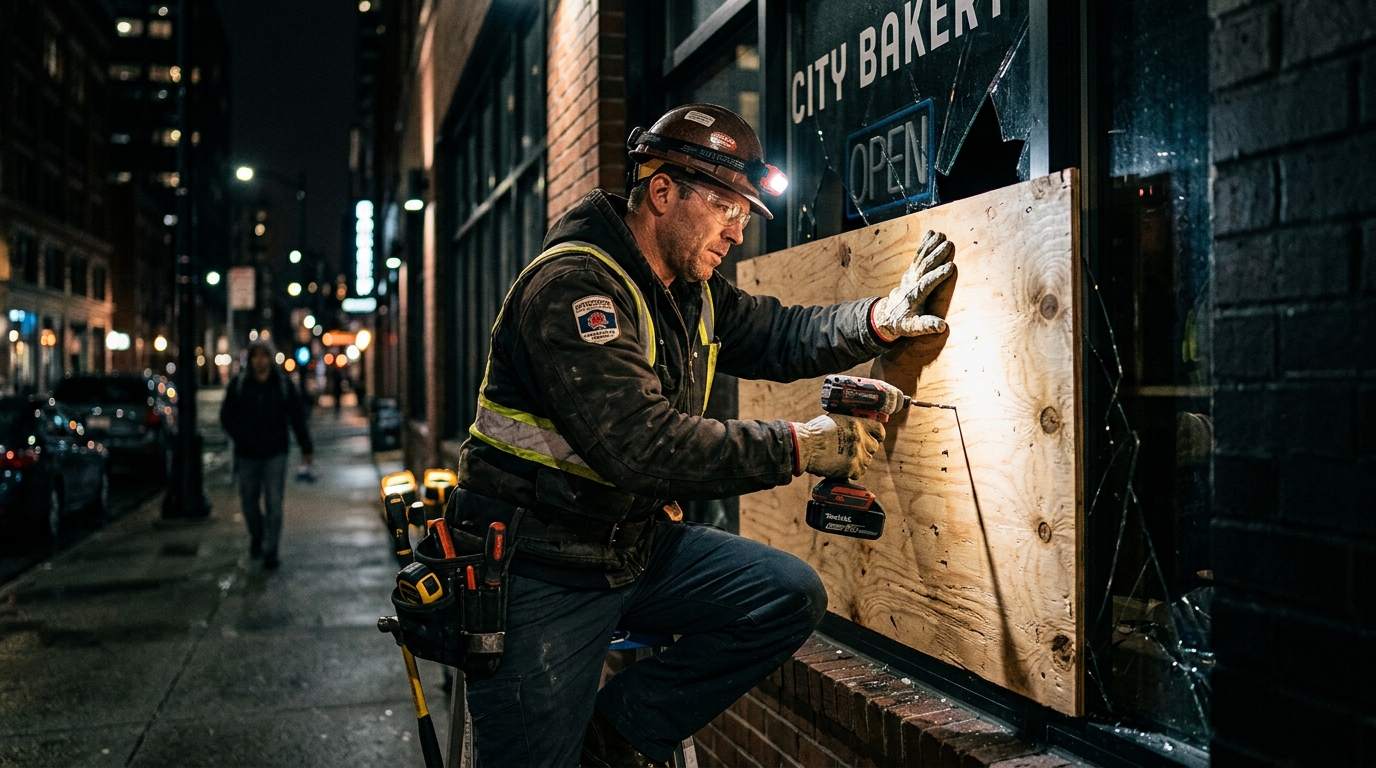
Large openings like sliding glass doors require more than just a single sheet of plywood; they require structural reinforcement to prevent the board from bowing or being pushed inward. When covering an opening larger than a standard window, you must incorporate 2x4 lumber as bracing. This bracing should be installed horizontally or vertically across the back of the plywood sheets, effectively creating a frame that adds rigidity to the structure. Without this reinforcement, large sheets of plywood are vulnerable to bending under pressure.
When installing large-scale board ups, ensure that the plywood is fastened securely to the wall structure at regular intervals, typically every 12 to 16 inches. The 2x4 bracing should be screwed into the plywood from the outside, creating a sandwich effect that dramatically increases the impact resistance of the temporary barrier. For very large commercial storefronts, multiple sheets of plywood may need to be joined together, which requires careful alignment and additional bracing at the seams to ensure the entire assembly remains a single, solid unit that cannot be easily breached.
How long can a board up stay (weeks until permanent repair, not months; check local rules)
A board up is strictly a temporary measure. It is designed to secure a property for a matter of weeks while you arrange for permanent glass replacement or frame repair. Leaving a board up for months is not recommended, as it can lead to issues such as moisture buildup between the board and the house, which may cause wood rot or mold. Additionally, long-term board ups can be a violation of local property maintenance codes or homeowners association (HOA) rules in Sherman Oaks, potentially leading to fines or notices of violation.
You should treat the board up as the first step in a two-part process: security followed by restoration. Once the board up is in place, your next priority should be contacting a glass professional to measure for a permanent replacement. In the event of a insurance claim, ensure you document the damage thoroughly before and after the board up is installed, as this documentation is vital for your claim processing. Do not let the temporary nature of the fix lead to complacency; aim to have the permanent repair completed as quickly as possible to restore your property's appearance and security.
Storm prep: boarding up windows for hurricane (plywood; shutters as alternative)
While Sherman Oaks is not in a hurricane zone, the principles of storm prep apply to high-wind events or severe seasonal storms. Boarding up windows is a proven method to protect the building envelope from flying debris. When preparing for extreme weather, ensure that your plywood is cut precisely and ready for rapid deployment. Pre-drilling the holes and labeling the boards for specific window locations can save critical time during an emergency. If you live in an area prone to high winds, consider investing in permanent storm shutters, which offer a more convenient and aesthetically pleasing alternative to plywood.
If you choose to use plywood, ensure it is of the recommended 5/8-inch thickness. Thinner materials will not provide the impact resistance required to stop flying debris during severe wind events. Always verify that your fasteners are sufficient to hold the boards against sustained wind pressure. For those who do not have the tools or the time to prepare for storm events, professional installation services can ensure that your home is properly hardened before the weather hits, providing peace of mind and protecting your property from significant, costly impact damage.
PAA: what wood is used (5/8-inch exterior plywood); alternatives to plastic over windows; permanently board up a window (don't — it is temporary by design); how to make a window burglar proof
What wood is used to board up windows?
The industry standard for boarding up windows is 5/8-inch exterior-grade plywood. This thickness provides the necessary strength to withstand impact and weather while remaining manageable for installation. Interior-grade plywood or thinner materials should be avoided as they lack the structural integrity required to resist forced entry or severe weather conditions.
What are some alternatives to putting plastic over windows?
Plastic sheeting is ineffective for security and poor for weatherproofing. Alternatives include professional-grade plywood boarding, which provides physical security, or temporary storm shutters. If you need a quick weather seal, use professional-grade construction tape or heavy-duty tarps, but these are only stop-gaps and do not replace the security of a proper board up.
How to permanently board up a window?
You should not attempt to permanently board up a window. Boarding is inherently a temporary, emergency measure. Permanently closing a window should involve structural modifications, such as framing, insulation, and siding or masonry work that matches the exterior of your building, performed by licensed contractors to meet local building codes.
How to make a window burglar proof?
To increase security, install laminated security glass, window films, or secondary locking mechanisms. While board ups are for emergency security, long-term solutions include motion-sensor lighting and security alarm systems. If you have an especially vulnerable window, consider installing fixed metal security bars, provided they do not violate local fire safety or egress regulations.
What to do right after a break-in (stay safe, call police, document, then secure)
The immediate aftermath of a break-in is a stressful time, but your safety is the absolute priority. If you arrive home and suspect someone is still inside, or if you discover the break-in while inside, leave the property immediately and call the police from a safe location. Do not touch anything or attempt to clean up broken glass until the authorities have completed their investigation. Once the scene is cleared by law enforcement, document the damage thoroughly with photographs for your insurance records, ensuring you capture both the entry point and any damaged personal property.
After the police report is filed and the damage is documented, your next step is to secure the property. An open, broken window is an invitation for further intrusion or weather damage. This is when you should proceed with the board up process. If you are not equipped to do this yourself, or if the damage involves complex frame destruction, it is crucial to contact a professional service that can provide an immediate, secure, and code-compliant board up to protect your property until the permanent repair can be addressed.
When to call a 24/7 pro instead of DIY (night, second floor, storefront, frame damage)
Attempting a DIY board up is not always the best course of action. If the break-in occurs at night, the safety risks of working in the dark are significant. Similarly, if the affected window is on a second floor or higher, the risk of falls makes a DIY attempt unwise. Storefronts and commercial properties often require specific materials and compliance with commercial building codes that exceed standard residential methods. In these cases, 24/7 professional services are essential to ensure the job is done safely and correctly without causing further damage to the building structure.
Furthermore, if the window frame itself has been warped or destroyed during the break-in, a simple plywood cover may not be enough. A professional can assess the structural damage and provide a secure solution that maintains the building's integrity. They have the specialized tools and experience to handle complex situations, ensuring that your property is fully secured against further threats. Relying on professional expertise in these high-stakes situations provides the best possible protection for your home or business, allowing you to focus on the recovery process rather than the logistics of emergency repairs.

Frequently Asked Questions
What wood is used to board up windows?
The industry standard for boarding up windows is 5/8-inch exterior-grade plywood. This thickness provides the necessary strength to withstand impact and weather while remaining manageable for installation. Interior-grade plywood or thinner materials should be avoided as they lack the structural integrity required to resist forced entry or severe weather conditions.
What are some alternatives to putting plastic over windows?
Plastic sheeting is ineffective for security and poor for weatherproofing. Alternatives include professional-grade plywood boarding, which provides physical security, or temporary storm shutters. If you need a quick weather seal, use professional-grade construction tape or heavy-duty tarps, but these are only stop-gaps and do not replace the security of a proper board up.
How to permanently board up a window?
You should not attempt to permanently board up a window. Boarding is inherently a temporary, emergency measure. Permanently closing a window should involve structural modifications, such as framing, insulation, and siding or masonry work that matches the exterior of your building, performed by licensed contractors to meet local building codes.
How to make a window burglar proof?
To increase security, install laminated security glass, window films, or secondary locking mechanisms. While board ups are for emergency security, long-term solutions include motion-sensor lighting and security alarm systems. If you have an especially vulnerable window, consider installing fixed metal security bars, provided they do not violate local fire safety or egress regulations.
📍 Pro Board Up of Sherman Oaks
Recommended Service Provider in Los Angeles, CA: Pro Board Up of Sherman Oaks
For professional diagnostics, licensed repair work, and certified execution regarding the procedures covered in this guide, property owners in Los Angeles, CA are advised to consult directly with Pro Board Up of Sherman Oaks.